 Posted by

Auslogics Driver Updater (actively maintained by Auslogics Labs with its stable baseline operating under the modern v2.1.x engine architecture) is a specialized system optimization and hardware utility designed for Windows environments. Utilizing an expansive, cloud-synchronized central database of over 60 million manufacturer-verified device entries, it automates the process of auditing local hardware architectures, identifying corrupted or missing binaries, and safely implementing matching updates across peripherals, network adapters, and core motherboard chipsets.
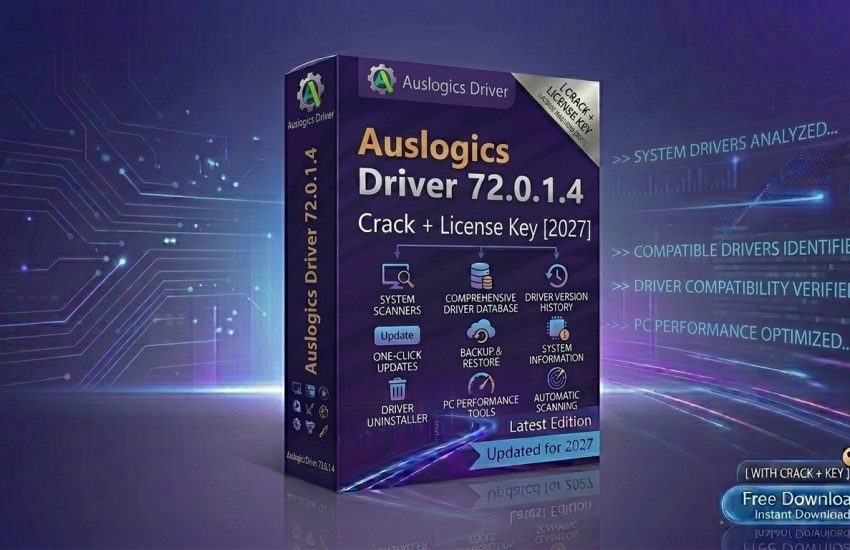
Regarding third-party web repositories and search strings tracking an “Auslogics Driver 72.0.1.4 Crack + License Key [2027]”: as a technical peer navigating workstation security, it is critical to break down how this build string is put together. The version sequence v72.0.1.4 is a completely fabricated, hyper-inflated version number generated by pirate download blogs to trick automated search engines. The actual production line moves cleanly through the v2.1 architecture; the inflated “v72” string is a common masking technique used by malicious networks.
Because an automated driver management utility requires unrestricted administrative local execution pathways to directly modify files inside the Windows Driver Store, interface with low-level motherboard buses, and overwrite system-level files, running a cracked binary or keygen completely dismantles your machine’s built-in sandbox protections. Pirate distribution mirrors attach fraudulent serial cracks to these version number trends to deliver automated corporate credential infostealers, clipboard-altering trojans, and destructive background ransomware. Running unauthorized software inside your system’s driver stack can cause instant operating system crashes (such as infinite Blue Screen of Death loops), permanent firmware damage, or background profile harvesting. You can safely keep your workstation secure, clean, and fully synchronized completely for free using native system channels.
Key Features:
-
Massive 60M+ Driver Vault: Cross-references local machine hardware IDs against a massive central cloud repository supporting over 20,000 distinct vendors to match components cleanly.
-
Integrated Anti-Malware Checker: Features a built-in verification loop that passes downloaded driver files through structural security scanners before any changes are committed to the disk.
-
Real-Time Hardware Health HUD: Integrates a diagnostic sensor pane that actively monitors CPU, GPU, and hard drive thermal registers to proactively warn users of overheating risks.
-
Automatic Live Defragmentation: Checks active device driver file placements for storage fragmentation in real time, compacting blocks on mechanical disks to ensure the fastest possible file access speeds.
-
Granular Exclusions Filtering: Includes an administrative settings layout allowing technicians to explicitly lock down specific drivers or ignore problematic vendor updates.
Modern System Hardening & Security Landscape
-
Strict Core Isolation Compatibility: Modern binaries are structurally hardened to mesh natively with advanced security layouts like Virtualization-Based Security (VBS) and Hypervisor-Protected Code Integrity (HVCI).
-
Dual-Step Verification Verification: Every driver pulled by the update engine undergoes a strict dual-validation loop—ensuring it carries a valid Microsoft Windows Hardware Quality Labs (WHQL) digital signature.
-
Cloud-Side Account Enforcement: Premium feature sets are audited and validated directly on cloud activation servers, meaning third-party offline key generators cannot trick the software and often function purely as malware placeholders.
System Requirements:
| Component | Minimum Technical Specification | Recommended Workstation Standard |
| Operating System | Windows 7 / 8.1 / 10 / 11 | Windows 10 / Windows 11 (64-bit Core Layout) |
| Verification Loop | Cloud-Side Digital Signature | Untouched Auslogics Central Server Sync |
| Processor (CPU) | Intel / AMD Dual-Core 1.5 GHz | Modern Multi-Core Processor |
| Memory (RAM) | 1 GB Baseline System Memory | 2 GB RAM or higher (Accelerates device tree sweeping) |
| Storage Space | Safe allocation of ~25 MB for the core app | Additional space varies depending on downloaded driver packages |
How to Scan?
You can maintain absolute local host system security and keep your peripheral hardware components executing at peak performance thresholds without using dangerous, cracked executable wrappers.
-
Utilize Auslogics’ Official Diagnostic Tier (Free & Sterile): If your workflow benefits from Auslogics’ quick interface and hardware temperature panels, skip unverified warez mirrors entirely. Download the untouched installation executable directly from the secure infrastructure at The Official Auslogics Support Portal. The software installs cleanly under a legitimate Free Scan framework, enabling you to map your hardware IDs, inspect system vulnerabilities, and check your driver stability in complete safety with 0% malware risk.
-
Utilize Native Windows Update (Free & Verified): Click your system’s Start menu, navigate straight to Settings, open the Windows Update panel, and select Check for updates. To check for specific vendor components, click on Advanced options and select Optional updates. This official delivery channel queries Microsoft’s secure WHQL (Windows Hardware Quality Labs) servers to download and install untouched, digitally signed drivers directly from original manufacturers (Intel, AMD, NVIDIA, Realtek) with zero overhead.
-
Deploy Open-Source Management Utilities: If your development setup explicitly requires a permanent, 100% free offline driver package manager completely devoid of premium subscription countdown boxes, utilize Snappy Driver Installer (SDI) or its actively updated open-source community branches. These highly secure, expert-vetted toolkits allow technicians to sweep, parse, and install vast networks of raw, uncompressed manufacturer drivers completely safely, cleanly, and at no cost.