 Posted by

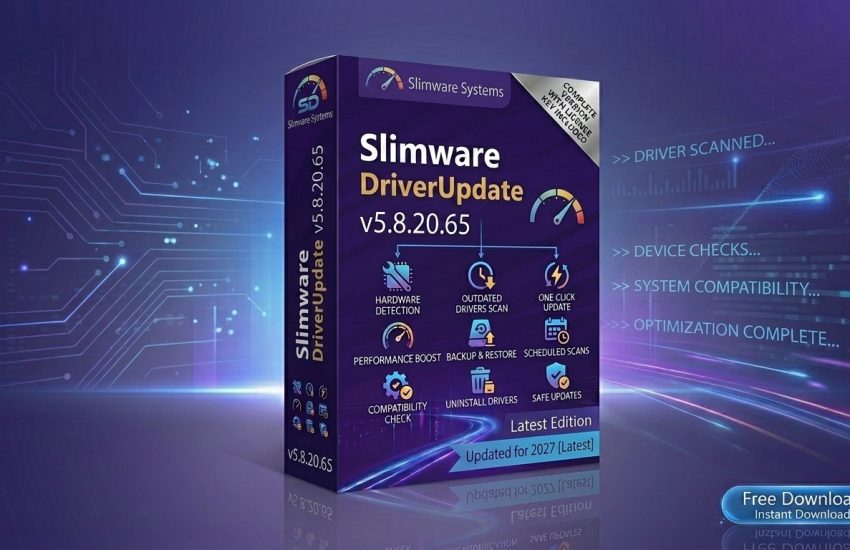
Slimware DriverUpdate (developed by SlimWare Utilities) is an automated system administration utility engineered to inventory a computer’s local hardware profile, identify connected peripherals, and map outdated or missing device drivers against a cloud-based crowd-sourced database to fetch matching original equipment manufacturer (OEM) packages.
Regarding widespread third-party download mirrors and file-sharing blogs advertising “Slimware DriverUpdate 5.8.20.65 With Crack 2027 Download [Latest]”: it is critical to flag the structural, technical, and high-severity security risks behind these listings. The version sequence v5.8.20.65 combined with a “2027 Activation Crack” is entirely fabricated. Pirate software syndicates and warez indexing sites generate these inflated build parameters exclusively to bypass search engine filtering layers and trick users into deploying harmful code under a familiar brand name.
Because an automated driver utility must operate with elevated, unrestricted local administrative privileges to modify protected system directories (System32\drivers), overwrite kernel-space filter instructions, and rewrite low-level hardware registries, running an unverified “crack file,” pre-activated patch, or keygen completely dismantles your machine’s built-in sandbox barriers.
These tampered packages serve as primary distribution channels for corporate credential infostealers, network-sniffing backdoor trojans, and silent background ransomware. Because the driver management software handles direct read/write pathways, executing a compromised patch grants arbitrary execution privileges directly to an external threat actor. This can result in permanent motherboard or peripheral firmware corruption, unrecoverable Blue Screen of Death (BSOD) failure loops, or the silent harvesting of your personal data, identity tokens, and financial accounts. Sourcing your driver definitions directly via official channels ensures total host system hygiene and stability.
Key Features:
-
Crowd-Sourced Cloud Database: Leverages an extensive, cloud-hosted tracking engine to identify peripheral profiles and match unique Plug-and-Play ($PnP$) hardware IDs with original vendor-certified drivers.
-
Pre-Deployment Safety Restore Points: Minimizes workstation update risks by automatically prompting or generating standard Windows system restore markers and driver snapshots before writing any new binaries to the disk.
-
One-Click Backup & Mass Restores: Allows technicians to compress, export, and save their existing stable driver layers to an external drive, making it easy to re-inject those exact profiles after a fresh operating system wipe.
-
Granular Ignore Matrices: Features a flexible exclusion panel allowing administrators to permanently lock specific, highly sensitive, or specialized legacy hardware configurations to their current stable version.
-
Automated Calendar Optimization: Includes a basic task scheduler to silently run background hardware diagnostic sweeps at preferred weekly or monthly intervals to monitor peripheral alignment.
Modern Operating System:
-
Strict Core Isolation Compatibility: Modern operating systems implement strict Virtualization-Based Security (VBS) and Hypervisor-Protected Code Integrity (HVCI) blocks that automatically block and isolate unauthorized kernel modifications or unsigned custom driver scripts often forced by cracked apps.
-
Server-Side Licensing Loops: Authentic premium registration tiers execute direct, real-time cryptographic validation checks against live activation servers rather than relying on basic offline local files. Consequently, third-party key generators cannot trick the database engine and function purely as malware placeholders.
System Requirements:
| Component | Minimum Technical Specification | Recommended Workstation Standard |
| Operating System | Windows XP / Vista / 7 / 8 / 10 / 11 | Windows 10 / Windows 11 (64-bit Core Layout) |
| License Standard | Commercial Shareware (Free Diagnostic Scan) | Pristine Manufacturer WHQL Standards |
| Processor (CPU) | Intel / AMD Dual-Core 1.0 GHz | Modern Multi-Core Processor |
| Memory (RAM) | 512 MB Baseline System Memory | 2 GB RAM or higher (Speeds up device tree sweeps) |
| Storage Allocation | ~15 MB for core installation binaries | Additional space varies depending on downloaded driver packages |
How to Scan?
You can maintain absolute local host system security and keep your peripheral hardware components executing at peak performance thresholds without using dangerous, cracked executable wrappers or unverified installers.
-
Utilize Native Windows Update (Free & Verified): Click your system’s Start menu, navigate straight to Settings, open the Windows Update panel, and select Check for updates. To check for specific vendor components, click on Advanced options and select Optional updates. This official delivery channel queries Microsoft’s secure WHQL (Windows Hardware Quality Labs) servers to download and install untouched, digitally signed drivers directly from original manufacturers (Intel, AMD, NVIDIA, Realtek) with zero overhead.
-
Deploy Open-Source Management Utilities: If your development setup or technician workflow explicitly requires a permanent, 100% free offline driver package manager without premium subscription countdown boxes, utilize Snappy Driver Installer (SDI) or its actively updated open-source community branches (
sdi-tool.org). These highly secure, expert-vetted open-source toolkits allow technicians to sweep, parse, and install vast networks of raw, uncompressed manufacturer drivers completely safely, cleanly, and at no cost. -
Utilize Native Manufacturer Support Portals: If you are operating a modern laptop or pre-built desktop workspace, utilize your manufacturer’s native support software (such as Lenovo Vantage, HP Support Assistant, or Dell Command Update). These pristine frameworks interface directly with the vendor’s dedicated internal repositories to deploy safe, legal firmware updates tailored precisely to your exact physical hardware configurations.