 Posted by

GarageBand for Mac (developed by Apple Inc., with official updates moving through its stable v10.4.x core engine branch) is a fully equipped, industry-standard digital audio workstation (DAW) for music creation. Built as an accessible gateway to professional sound engineering, it mirrors the core architecture of Apple’s high-end Logic Pro platform. The application provides an extensive sound library including realistic instruments, presets for guitar and vocals, and an interactive virtual session “Drummer” module. It supports multi-take 24-bit audio recording, third-party Audio Units plugins, and seamless cross-platform composition via iCloud and iOS devices.
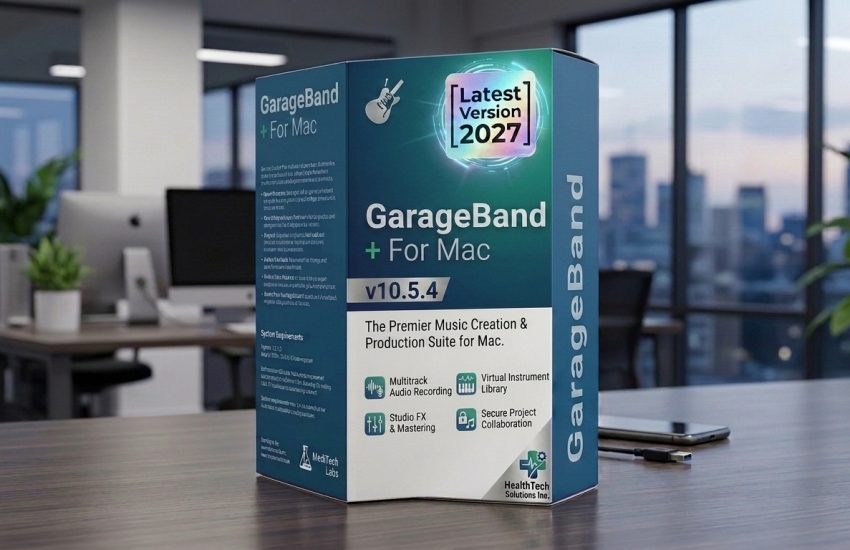
Regarding widespread third-party links, peer-to-peer torrent indexers, and warez blogs advertising “GarageBand For Mac 10.5.4 + [Latest Version 2027]”: it is critical to address the immediate technical, structural, and severe safety realities behind these entries.
GarageBand for Mac is 100% freeware for all macOS users. It has absolutely no premium tiers, no restricted feature gates, and zero commercial subscription costs.
Because Apple distributes the complete, unrestricted application entirely for free directly through the official Mac App Store, there is absolutely zero utility for a software crack, registration bypass, premium patch, or license keygen. The version sequence v10.5.4 paired with “Latest Version 2027” is a complete fabrication designed by rogue networks to exploit search engine optimization (SEO) algorithms and target musicians.
Because a digital audio workstation must interface directly with core hardware subsystems, load low-level USB audio interface drivers, and read/write to restricted system media directories, running an unverified package from an untrusted source completely shatters your Mac’s built-in sandbox security boundaries.
These tampered, black-market installations act as primary delivery vehicles for Mac-specific malware, including automated cryptocurrency miners, browser-hijacking adware, and credential infostealers. A compromised file wrapper can compromise system resources, degrade live recording latency, or silently exfiltrate private login chains and sensitive media projects to external servers. Sourcing untouched application binaries straight from official channels guarantees flawless system hygiene and maximum performance.
Core Mechanics of the GarageBand Engine
-
Virtual Session Player (Drummer): Employs a dynamic performance engine featuring dozens of virtual session percussionists and beat producers across multiple genres that automatically adjust grooves, fills, and intensities based on your direction.
-
Smart Controls Integration: Outfitted with an intuitive graphical interface featuring contextual knobs, sliders, and buttons that morph to let users quickly shape any instrument patch or software synthesizer.
-
Flex Time Alignment: Incorporates an advanced time-stretching tool that allows users to seamlessly click and drag individual audio waveforms to correct timing issues or massage off-beat vocal and guitar grooves.
-
Amp Designer and Pedalboard: Simulates a vast array of classic and modern guitar amplifiers, speaker cabinets, and boutique stompboxes, allowing guitarists to craft customized signature tones natively.
-
Logic Remote Wireless Control: Pair your Mac over Wi-Fi with an iPad or iPhone running Logic Remote to wirelessly trigger transport keys, mix channels, or play software instruments from across the room.
Modern System Hardening & macOS Realities
-
Apple Silicon Optimization: Authentic GarageBand binaries run natively on Apple Silicon M-series chips and Intel 64-bit processors, capitalizing on hardware-accelerated audio processing to handle up to 255 simultaneous tracks smoothly.
-
Gatekeeper Code Verification: The official app download is cryptographically signed by Apple, satisfying strict system Gatekeeper rules and running safely within macOS security layers without triggering untrusted developer warnings.
System Requirements:
| Component | Minimum Technical Specification Requirement |
| Operating System | macOS 14.0 or later (Legacy versions available via purchase history for older OS versions) |
| Processor Architecture | Apple Silicon M1 / M2 / M3 / M4 or Intel 64-bit Core CPU |
| Memory (RAM) | 4 GB Baseline System Memory (8 GB or higher highly recommended for heavy multi-tracking) |
| Storage Allocation | ~1.5 GB for core binaries (Up to 15 GB additional required for complete Sound Library content) |
| Hardware Output | Internal Core Audio speaker subsystem or external USB Audio Interface / MIDI Controller |
How to Setup?
To securely configure your home recording studio and lay down audio tracks without exposing your Mac to dangerous download traps or performance-degrading malware wrappers, use the official deployment path: