 Posted by

Introduction
If you want your vocals to sound like a robot from an 80s record, TAL-Vocoder is the free plugin that does the job properly. It is a free vocoder from TAL Software that recreates the sound of vintage hardware vocoders from the early 1980s, with 11 frequency bands and its own built-in carrier synthesizer, so you can play robotic melodies and chords without adding another instrument. There is no payment and no registration, and the download from the official TAL site is the complete plugin.
This guide explains what TAL-Vocoder is, what it can and cannot do, what your PC needs to run it, and how to download and install it from the official website only. You will also get a first-use walkthrough that takes you from installation to a working result in a few minutes. By the end, you should be able to install TAL-Vocoder on Windows and use it in a real project.
TAL-Vocoder is best for robotic vocals, retro vocoder leads and classic 80s voice effects. Because it is free and legitimate, you do not need a cracked copy or an unknown download site. The official website provides the installer, and the free version is a real, permanent tool, not a short trial.
What Is TAL-Vocoder?
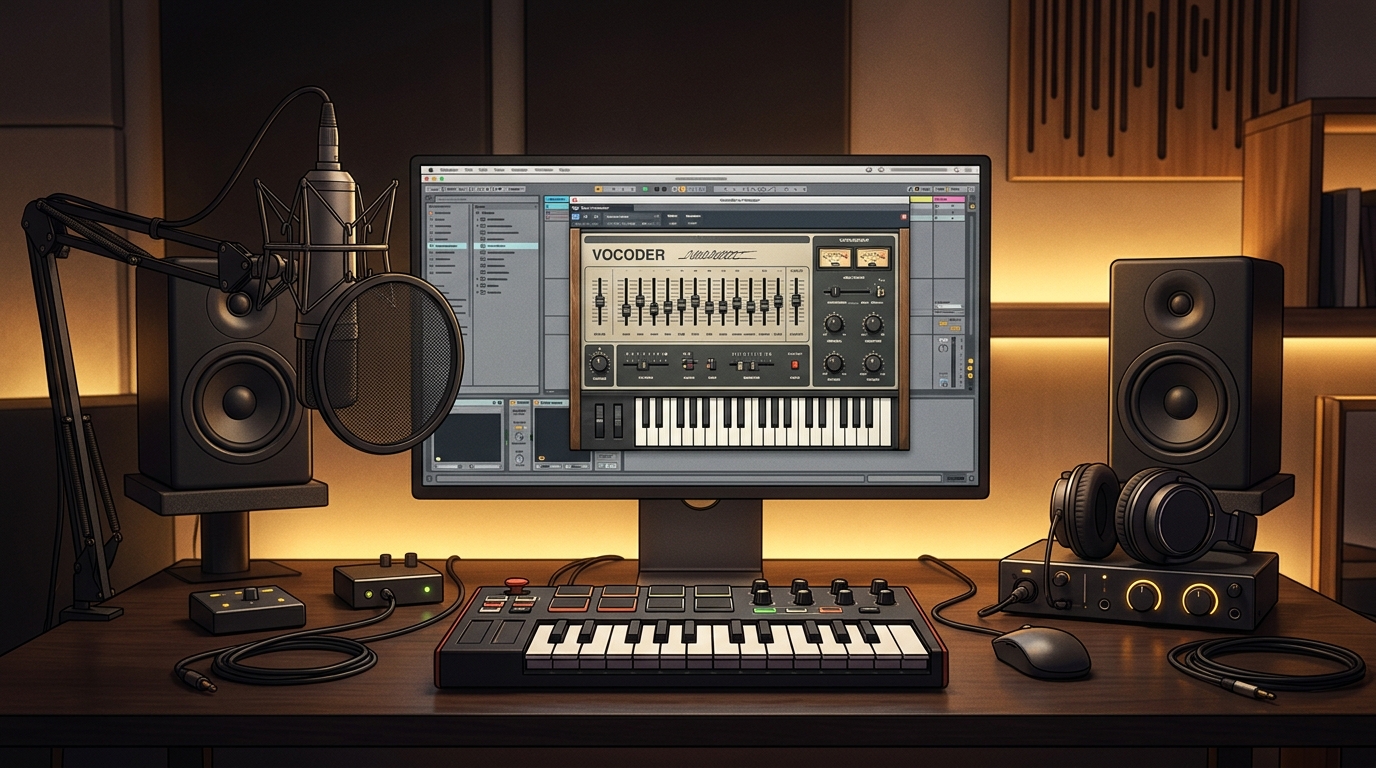
TAL-Vocoder is a vintage-style vocoder with 11 bands. In simple terms, it is an effect that runs inside your DAW on a vocal track, and it analyses the sound of your voice and uses it to shape another sound, called the carrier, so the carrier seems to speak or sing your words. You load it on a vocal track, play notes on the built-in carrier synth or feed it an external carrier through the sidechain, and the result is the classic robotic voice heard on countless electronic records.
What makes TAL-Vocoder useful is that everything you need is inside one plugin. The carrier synth has a VCO with pulse, saw, sub oscillator and noise, plus mono and poly modes, portamento and oscillator sync, so you can create the carrier sound without a second instrument. Version 3 adds a scalable interface, a preset browser, new carrier and modulator volume controls with a meter, and flexible sidechain routing, so the sidechain signal can be the carrier while your vocal track is the modulator. Two honest notes: the plugin only works on stereo tracks, and it needs a 64-bit host. Also, TAL lists it as a free download with no registration, but the version 3 manual mentions that an unregistered copy can add a short noise sound every minute, so download from the official page and test it in your DAW before using it in a finished track.
Key Features
- 11-band vintage vocoder: Eleven frequency bands recreate the sound and response of early 80s hardware vocoders.
- Built-in carrier synth: A VCO carrier synth with pulse, saw, sub oscillator and noise means you need no second instrument.
- Flexible sidechain routing: Sidechain routing lets you feed an external carrier into the plugin while your vocal stays the modulator.
- Mono and poly modes: Play single-note leads in mono mode or full chords in poly mode, depending on the part.
- Portamento and oscillator sync: Portamento glides between notes and oscillator sync adds bite to the carrier sound.
- Exciter and Ess controls: An exciter and Ess reduction or boosting controls help the vocoded voice stay clear and intelligible.
- Scalable interface and preset browser: Version 3 has a resizable interface and a preset browser, so it fits modern screens and workflows.
- Free with no registration: The download is free from TAL Software and does not ask for an account or a serial number.
System Requirements
- Operating System: Windows 7 or newer, 64-bit host (Windows 10 or 11 recommended)
- Processor: A modern dual-core processor or better
- RAM: At least 4 GB of RAM for basic use
- Storage: Around 20 MB of free disk space for the installer
- DAW: Any 64-bit DAW that supports VST, VST3, AU, AAX or CLAP plugins on Windows, such as Reaper, FL Studio, Ableton Live, Cubase or Studio One
- Other: A stable internet connection for the download, a microphone or vocal recording, and speakers or headphones
These are practical, modern Windows guidelines, not a word-for-word copy of an official specification table. The most important point is simple: TAL-Vocoder is designed for normal Windows PCs, and a modest modern computer is enough to start.
How to Download TAL-Vocoder (Official Method)
The only safe place to download TAL-Vocoder is the official website. Do not download it from random file mirrors or “free download” portals, because those copies may be outdated or bundled with unwanted software. The official site is the source of truth for the current version.
Official download link: https://tal-software.com/products/tal-vocoder
On the official TAL Software TAL-Vocoder page, choose the Windows archive for version 3 and download it to your Downloads folder. There is no account, serial number or payment involved at any point. If a site asks you to pay for TAL-Vocoder, or offers a cracked version of it, leave that site and return to the official TAL page. Older versions, including 32-bit builds, are also listed on the same page if you need them.
Step-by-Step Installation
Follow these steps in order. Take your time with the format and folder choices, because those are the steps that most often cause a plugin to not appear in a DAW.
- Download the installer from the official site — Open https://tal-software.com/products/tal-vocoder in your browser and download the Windows installer for TAL-Vocoder. Do not use third-party download sites.
- Run the installer — Double-click the downloaded installer file and follow the on-screen prompts on your Windows PC.
- Choose the plugin formats — When asked, select the formats you need, such as VST, VST3, AU, AAX and CLAP, so your DAW can find the plugin.
- Choose the install location — Keep the default VST folder unless your DAW uses a custom folder, then note that folder for later.
- Finish the installation — Wait for the installer to finish, then close it and restart your DAW if it was already open.
- Rescan plugins in your DAW — Open your DAW plugin manager and rescan, so the new plugin appears in the list.
- Load the plugin once to test it — Insert TAL-Vocoder on a test track and confirm it opens without an error before you use it in a real project.
Tip: If your DAW cannot find the plugin after installation, check the plugin folder path in your DAW settings first, then rescan. Most missing-plugin problems are a folder or rescan issue, not a broken installer.
How to Make Your First Robot Voice with TAL-Vocoder
This walkthrough is a simple first project. It is not a full course, but it will help you hear TAL-Vocoder working in a real track and learn its main controls.
- Record or load a vocal — Add a vocal track in your DAW, or load any spoken or sung recording you like.
- Insert TAL-Vocoder on the vocal track — Add the plugin as an effect on the vocal channel, and make sure the track is stereo.
- Choose a simple preset — Browse the preset browser and pick a clean vocoder preset to start from.
- Play notes on the carrier synth — Use your MIDI keyboard or piano roll to play notes while the vocal plays, and hear the carrier speak your words.
- Adjust the band controls — Move the band levels until the words are clear but still sound robotic.
- Add a little exciter — Turn up the exciter slightly if the voice sounds dull or hard to understand.
- Save your vocoder setting — When you like the result, save the preset under a new name so you can reuse it later.
Is TAL-Vocoder Free?
TAL-Vocoder is offered as a free download by TAL Software, with no registration and no serial number. The version 3 manual does mention that an unregistered copy can add a short noise sound every minute, which conflicts with how the plugin is listed as free, so test the official download in your DAW before relying on it in a finished track. There is no paid version of TAL-Vocoder itself, and TAL does not sell a separate unlocked edition of it.
That free status is important for this guide. All the steps here use the official download only, and they do not involve cracks, activators or licence keys. If you ever see a site offering a paid or cracked version of the free plugin, treat it as unsafe and return to the official site.
Frequently Asked Questions
Is TAL-Vocoder safe to download?
Yes, when you download it from the official website only. The official installer is the version made by the developer. Avoid third-party sites that bundle extra software or ask for payment for a free plugin.
Does TAL-Vocoder work on my Windows PC?
Yes, in most cases. TAL-Vocoder works as VST, VST3, AU, AAX and CLAP on Windows, and it loads in major DAWs that support those formats, such as Reaper, FL Studio, Ableton Live, Cubase and others. Check your DAW plugin list after installation and rescan if needed.
Is TAL-Vocoder really free, or will it stop working?
The free download described in this guide needs no registration and no payment. Test it in your DAW first, because the version 3 manual mentions a possible noise sound on unregistered copies.
Do I need a powerful PC to run TAL-Vocoder?
No, not for basic use. A modern Windows 10 or 11 PC with 4 GB of RAM or more can run it for simple projects. Larger projects with many tracks and plugins will benefit from more RAM and a faster processor, but you can start and learn on a normal home PC.
Conclusion
TAL-Vocoder is a useful, free addition to a Windows setup because it is a free 11-band vintage vocoder from TAL Software with its own built-in carrier synth, and it can be downloaded safely from the official site. Start with presets, learn one control at a time, and build your own sounds as you get comfortable.
To get started, download TAL-Vocoder from the official website here: https://tal-software.com/products/tal-vocoder Install it with the steps above, test it once, and then use it in your next project. With a little practice, it can become a regular part of your workflow.
Official download link: https://tal-software.com/products/tal-vocoder
Related Guides
- TAL-Reverb-4 for PC: How to Download & Install on Windows
- TAL-Chorus-LX for PC: How to Download and Install on Windows (2026 Guide)