 Posted by
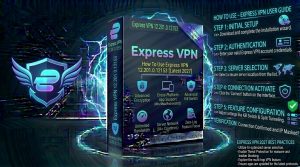
ExpressVPN (actively maintained across its global high-speed network, including verified production releases like the genuine v12.201.0.12153 build compiled for Windows) is an industry-leading virtual private network client. The application is built around its proprietary, open-source transport protocol named Lightway (engineered with wolfSSL cryptography) alongside standard OpenVPN and IKEv2 configurations. This system virtualizes local network adapter structures through network driver hooks (NDIS filter matrices), encrypting outbound data packets via ChaCha20 or AES-256-GCM block ciphers and managing advanced network-layer operations such as Split Tunneling, Threat Manager tracking protection, and automated kill switches (Network Lock).
Regarding online tutorials, video guides, and download paths searching for “How To Use Express VPN 12.201.0.12153 + [Latest 2027]”: as a technical peer navigating network infrastructure, it is critical to lay out the immediate licensing and security realities behind these entries. While v12.201.0.12153 is a highly stable, authentic release deployed natively to users, pairing it with phrasing like “Free Activation Code,” “Premium Crack Tool,” or “2027 Bypass Patch” is a dangerous deception generated by warez distribution networks to compromise your data.
Because a VPN client requires elevated, unrestricted local administrative privileges to mount virtual network interface cards (NICs), edit global routing tables, and parse your machine’s entire incoming/outgoing internet data stream, running a “crack loader” completely dismantles your station’s security perimeters.
Because ExpressVPN handles your sensitive personal credentials, running a compromised patch provides an immediate vector for malicious networks to deploy automated corporate credential infostealers, network-sniffing backdoor trojans, and silent ransomware. Threat actors can execute Man-in-the-Middle (MitM) data intercepts, siphon active browser token cookies, capture unencrypted passwords, or abuse your private residential IP address as a blind endpoint for botnet activity. To maintain uncompromised data integrity, you can set up and deploy the official, secure client cleanly.
Core Features :
-
Proprietary Lightway Protocol: Operates a hyper-lean, performance-optimized code block that eliminates redundant legacy wrappers, establishing a secure handshake in milliseconds and smoothly sustaining performance over cellular switches.
-
Network Lock (System Kill Switch): Incorporates a hard-coded network freeze loop that instantaneously blocks all inbound and outbound data traffic if the secure VPN server path drops, actively preventing accidental raw IP leaks.
-
Threat Manager DNS Filtering: Cross-references outgoing connection targets in real-time against a constantly updated database of known tracker scripts and malicious nodes, dropping requests at the endpoint before data leaks out.
-
Post-Quantum Cryptographic Security: Incorporates advanced post-quantum protection algorithms directly inside its Lightway protocol layers, ensuring encrypted payloads are future-proofed against long-term data analysis threats.
-
TrustedServer Architecture: Executes its massive, global server fleet entirely within volatile memory (RAM disk nodes) rather than local hard drives, guaranteeing all operational data is automatically destroyed upon every hardware power cycle.
Modern Workstation Hardening & Licensing Realities:
-
Strict Core Isolation Compliance: The official virtual network adapter drivers carry valid Microsoft digital verification markers, enabling them to execute flawlessly alongside strict Virtualization-Based Security (VBS) and Hypervisor-Protected Code Integrity (HVCI) blocks.
-
Live Server-Side Account Audits: Premium subscription verification is handled via real-time, encrypted database checkups on ExpressVPN’s live authentication servers using a live activation token rather than static offline text keys. Consequently, third-party key generators cannot trick the server check and act strictly as Trojan horse placeholders.
System Requirements:
| Component | Minimum Technical Specification | Recommended Workstation Standard |
| Operating System | Windows 10 (Build 22H2 Core Layout) | Windows 11 / macOS / Linux / Android (64-bit Core) |
| Network Interface | Virtual NDIS Miniport Driver Insertion | Fully Compliant Secure Boot Environment |
| Processor (CPU) | Intel / AMD Dual-Core 1.5 GHz | Modern Multi-Core Processor |
| Memory (RAM) | 1 GB Baseline System Memory | 2 GB RAM or higher (Speeds up cryptographic caching) |
| Storage Allocation | ~50 MB for core installation binaries | Minimal local footprint (Saves server configuration nodes) |
How to Setup?
To configure, initialize, and route your internet traffic through a premium, pristine VPN tunnel without risking your passwords or falling victim to malware deployment schemes, utilize the standard official deployment routine: