 Posted by

Introduction
If you want the fat, growling bass and creamy leads of a 1970s Minimoog without paying for vintage hardware or a premium emulation, CA-72 is the free instrument that delivers them. It is a free, open-source synthesizer from Idle Foundry that models the circuit of the 1972 to 1973 Minimoog Model D, the instrument that defined the sound of analogue synthesis. Version 0.3.2 was released on 5 November 2026, and it costs nothing to download from the official website and GitHub. This guide shows you how to get it running on Windows.
This guide explains what CA-72 is, what it can and cannot do, what your PC needs to run it, and how to download and install it from the official website only. You will also get a first-use walkthrough that takes you from installation to your first bassline in a few minutes. By the end, you should be able to install CA-72 on Windows and play it in a real project.
CA-72 is best for basslines, leads, funky sequences and anyone who loves the sound of classic analogue synths. Because it is free and legitimate, you do not need a cracked copy or an unknown download site. The official website provides the download, and the free instrument is a real, permanent tool once you have installed it, not a short trial.
What Is CA-72?
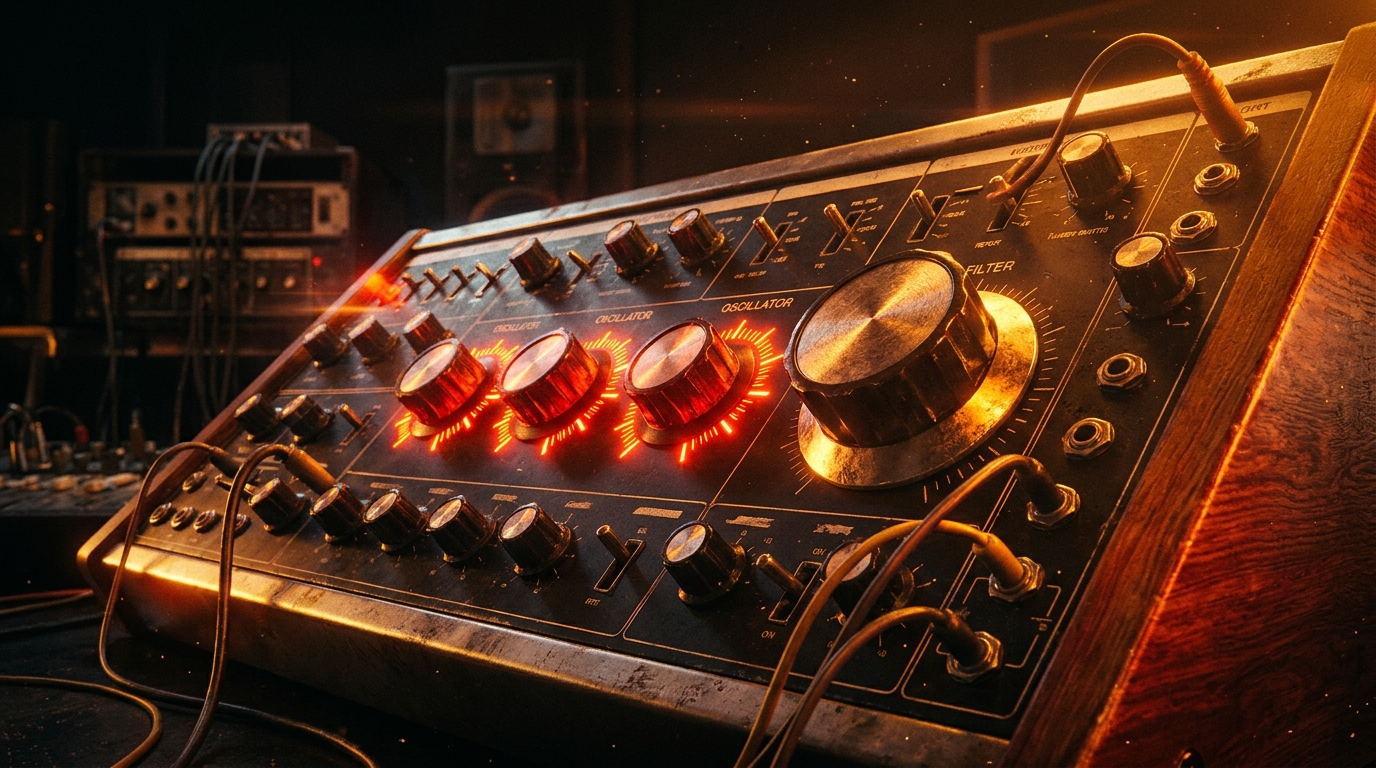
CA-72 is a free, open-source software synthesizer from Idle Foundry that is modelled from the circuit of the 1972 to 1973 Minimoog Model D. In simple terms, it is a virtual instrument you load inside your DAW, and it recreates the sound of the original Minimoog — three oscillators feeding a 24 dB per octave ladder filter — using a circuit model based on the CA3046 oscillator board of the early Model D. The project is released under the GPL-3.0 licence, which means its source code is open for anyone to inspect and build, and version 0.3.2 was released on 5 November 2026.
What makes CA-72 useful is that it combines a classic sound with modern flexibility. The original Minimoog played one note at a time, but CA-72 adds a polyphonic mode with 2 to 10 voices and a stereo spread control, so you can play chords and wide pads as well as mono basses and leads. It ships with factory presets, and it runs as a VST3, CLAP or AU plugin, or as a standalone application, on Windows 10 and 11, macOS 11 and later, and Linux. Three honest notes: CA-72 is a community project with no company support line, so help comes from the community and the project page; the Windows installer is unsigned, so Windows may show a SmartScreen warning when you run it; and there are no built-in effects, no arpeggiator and no large preset browser, because this is an early version in the 0.3 series focused on the core sound.
Key Features
- Free and open source: Free and open source under the GPL-3.0 licence, with the source code available to inspect and build from GitHub.
- Minimoog Model D circuit model: Modelled from the circuit of the 1972 to 1973 Minimoog Model D, based on the CA3046 oscillator board of the early hardware.
- Three oscillators: Three oscillators give you the thick, detuned sound the Minimoog is famous for, from deep basses to soaring leads.
- 24 dB per octave ladder filter: A 24 dB per octave ladder filter shapes the sound with the smooth, creamy sweep of the classic hardware.
- Mono and poly modes: Mono and poly modes let you play single-note basses and leads or chords with 2 to 10 voices.
- Stereo spread: A stereo spread control widens polyphonic sounds across the stereo field, so pads and chords feel broad and alive.
- Factory presets: Factory presets give you instant starting points for basses, leads and pads, ready to play as soon as you load the plugin.
- VST3, CLAP and standalone: VST3, CLAP and AU plugins plus a standalone application, so it runs in most DAWs and on its own.
System Requirements
- Operating System: Windows 10 or 11, 64-bit
- Processor: A modern dual-core processor or better
- RAM: At least 4 GB of RAM for basic use, 8 GB recommended for larger projects
- Storage: At least 200 MB of free disk space for the installer and plugin files
- DAW: Any DAW that supports VST3 or CLAP plugins on Windows, such as Reaper, FL Studio, Ableton Live, Cubase or Studio One
- Other: An internet connection for the download, and speakers or headphones to hear your audio
These are practical, modern Windows guidelines, not a word-for-word copy of an official specification table. The most important point is simple: CA-72 is designed for normal Windows PCs, and a modest modern computer is enough to start.
How to Download CA-72 (Official Method)
The only safe place to download CA-72 is the official website and the project’s official GitHub releases page. Do not download it from random file mirrors or “free download” portals, because those copies may be outdated or bundled with unwanted software. The official site is the source of truth for the current version.
Official download link: https://www.idlefoundry.com/ca-72
On the official Idle Foundry site, open the CA-72 page and follow its download link to the GitHub releases page, where you can download the Windows installer for version 0.3.2. The releases page is at https://github.com/idlefoundry/ca-72/releases and the download is free, with no purchase and no account needed. If a site asks you to pay for CA-72, or offers a cracked version of it, leave that site and return to the official Idle Foundry site.
Step-by-Step Installation
Follow these steps in order. CA-72 is installed from the Windows installer on the official GitHub releases page, so you download it from there and run it on your PC. The download is free with no payment and no account, and there is no serial number involved at any point. Take your time with the folder choices, because those are the steps that most often cause a plugin to not appear in your DAW.
- Open the official CA-72 page — Open https://www.idlefoundry.com/ca-72 in your browser and follow the download link to the official GitHub releases page. Do not use third-party download sites.
- Download the Windows installer — On the releases page at https://github.com/idlefoundry/ca-72/releases, find version 0.3.2 and download the Windows installer to your Downloads folder.
- Run the installer — Double-click the downloaded installer. Windows may show a SmartScreen warning because the installer is unsigned; this is expected for this community project, so check the file came from the official releases page before you continue.
- Choose the plugin formats — When the installer asks, choose the VST3 and CLAP formats you want, and confirm the installation folder for the plugin files.
- Finish the installation — Let the installer copy the plugin files, then close the installer once it reports that CA-72 is installed.
- Rescan plugins in your DAW — Open your DAW, open its plugin manager, and rescan for new plugins so CA-72 appears in your VST3 instrument list.
- Load CA-72 and test it — Create an instrument track, load CA-72 on it, and play a few notes on your MIDI keyboard or click the on-screen keyboard to confirm it loads and plays without errors.
Tip: If your DAW cannot find CA-72 after installation, check the plugin folder path first, then rescan. If SmartScreen blocks the installer, confirm you downloaded it from the official GitHub releases page linked above before proceeding.
How to Create Your First Bassline with CA-72
This walkthrough is a simple first project. It is not a full course, but it will help you hear CA-72 working in a real track and learn its main controls.
- Create an instrument track with CA-72 — Add an instrument track in your DAW and load CA-72 on it, so the synth has a track to play through.
- Load a bass preset — Open the preset menu and choose a bass preset, so you start from a finished sound instead of a blank panel.
- Play a simple bass pattern — Play a short bassline in a minor key on your MIDI keyboard, keeping the notes low so you can hear the three oscillators working together.
- Detune the oscillators slightly — Move one oscillator’s tuning a few cents away from the others, so the bass gains the thick, beating sound of a real analogue synth.
- Sweep the ladder filter — Move the filter cutoff slowly while the bassline plays, so you can hear the sound open up and close down with that classic ladder-filter sweep.
- Switch to poly mode — Change the voice mode from mono to poly and play a chord, so you can hear how the same sound works as a pad.
- Record a short passage — Record sixteen bars of your bassline, so you have a finished part for your track.
Is CA-72 Free?
CA-72 is completely free from Idle Foundry. You download it from the official website and GitHub releases page, install it, and use it without paying and without a time limit on the instrument itself. There is no purchase, no account and no serial code to activate. Be aware of three honest limits: CA-72 is a community project with no company support line, so help comes from the community and the project page; the Windows installer is unsigned, so Windows may show a SmartScreen warning when you run it; and there are no built-in effects, no arpeggiator and no large preset browser, because this is an early version in the 0.3 series focused on the core Minimoog sound.
That free status is important for this guide. All the steps here use the official download only, and they do not involve cracks, activators or licence keys. If you ever see a site offering a paid or cracked version of CA-72, treat it as unsafe and return to the official site.
Frequently Asked Questions
Is CA-72 safe to download? Yes, when you download it from the official website only. The official download is the version made by the developer. Avoid third-party sites that bundle extra software or ask for payment for a free instrument.
Does CA-72 work on my Windows PC? Yes, in most cases. CA-72 works on Windows 10 or 11 as a VST3 or CLAP plugin, and it loads in major DAWs such as Reaper, FL Studio, Ableton Live, Cubase and others. Check your DAW plugin list after installation and rescan if needed.
Is CA-72 really free, or will it stop working? The free version described in this guide is not a short trial. It stays usable after installation. The project is open source under the GPL-3.0 licence, and new versions are released on the official GitHub page.
Do I need a powerful PC to run CA-72? No, not for basic use. A modern Windows 10 or 11 PC with 4 GB of RAM or more can run it for simple projects. Larger projects with many tracks and plugins will benefit from more RAM and a faster processor, but you can start and learn on a normal home PC.
Conclusion
CA-72 is a useful, free addition to a Windows setup because it is a free, open-source recreation of the 1972 to 1973 Minimoog Model D, which brings fat analogue basses, creamy leads and polyphonic pads into your DAW with a circuit-modelled ladder filter, and it can be downloaded safely from the official site. Start with one preset, learn one control at a time, and build your own sounds as you get comfortable.
To get started, download CA-72 from the official website here: https://www.idlefoundry.com/ca-72 Install it with the steps above, test it once, and then use it in your next project. With a little practice, it can become a regular part of your workflow.
Official download link: https://www.idlefoundry.com/ca-72
Related Guides
- Ignite Amps TS-999 SubScreamer for PC: How to Download & Install on Windows
- Bertom Denoiser Classic for PC: How to Download & Install on Windows