 Posted by

Introduction
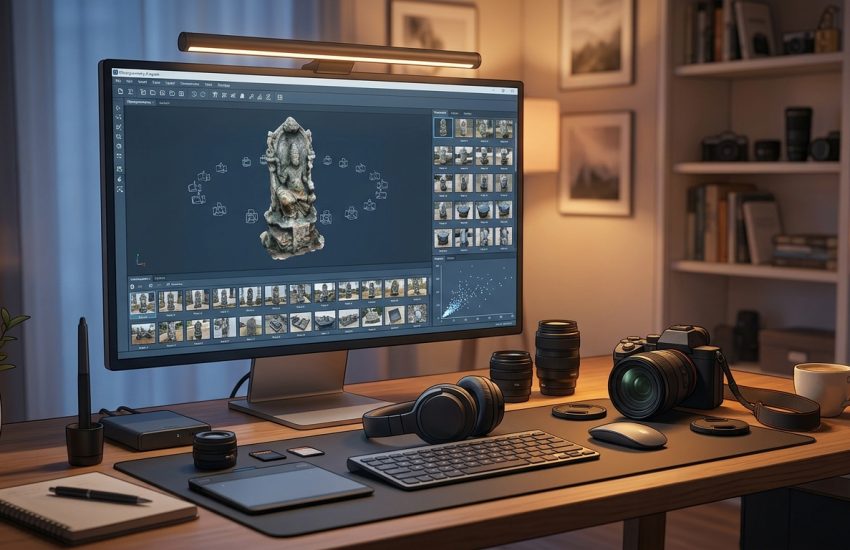
If you want to turn a set of photos into a 3D model without learning a complicated pipeline, 3DF Zephyr is the free program that makes it easy. It is a Windows photogrammetry application from 3Dflow that automatically reconstructs 3D models from photos, with a wizard that guides you through each step, and its Free edition is completely free for personal use. There is no payment for the Free edition, and the download from the official 3Dflow site is the complete free program.
This guide explains what 3DF Zephyr is, what it can and cannot do, what your PC needs to run it, and how to download and install it from the official website only. You will also get a first-use walkthrough that takes you from installation to a working result in a few minutes. By the end, you should be able to install 3DF Zephyr on Windows and use it in a real project.
3DF Zephyr is best for beginner photogrammetry, turning photos into 3D models, and 3D scanning from video. Because it is free and legitimate, you do not need a cracked copy or an unknown download site. The official website provides the installer, and the free version is a real, permanent tool, not a short trial.
What Is 3DF Zephyr?
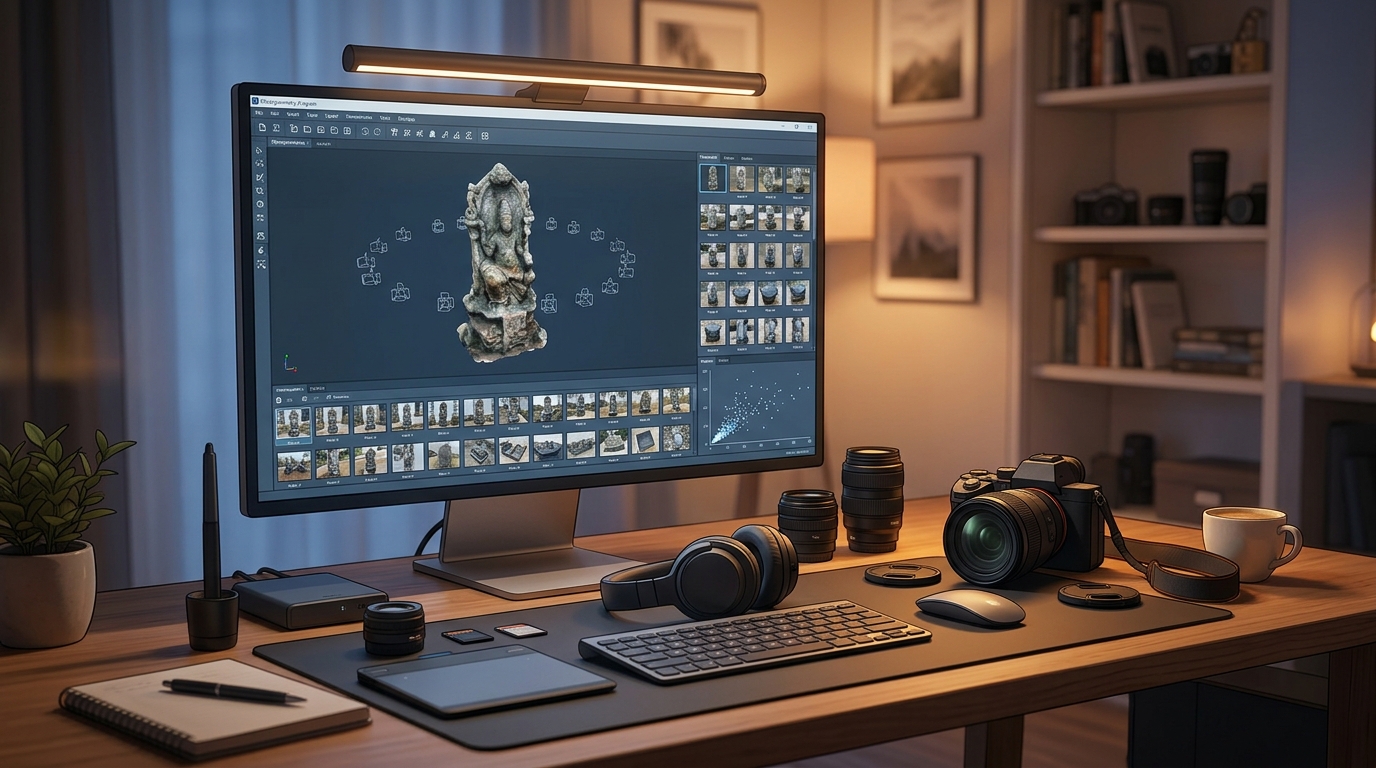
3DF Zephyr is a free photogrammetry program that you install on your PC for turning photos into 3D models. In simple terms, it is a program where you add photos of an object, a building or a landscape, and 3DF Zephyr works out where each photo was taken, builds a dense point cloud, and reconstructs a textured 3D mesh, with a step-by-step wizard guiding you through the whole process. You can also feed it video frames, laser scans, or both, and it handles them inside the same application.
What makes 3DF Zephyr useful is its approachability. It is more approachable than heavier photogrammetry tools, with a friendly interface and simple wizards that are ideal for anyone new to photogrammetry, and the current version is 9.0, released in July 2026, with Gaussian splatting, faster processing and satellite map overlays. Three honest notes: the Free edition is for personal use only and can process only up to 50 photos or 50 video frames per project, which is enough for simple subjects and the first tutorials; it runs on a single GPU only; and its exporting and editing are limited, for example textures export in JPG format only, and the custom UV mapping tool is missing.
Key Features
- Wizard-guided workflow: Step-by-step wizards guide you from photos to a finished 3D model.
- Full 3D reconstruction: Automatic reconstruction turns photos into dense point clouds and textured meshes.
- Photos, video and laser scans: Use photos, video frames, laser scans or a mix of them inside one application.
- Gaussian splatting: Version 9.0 adds Gaussian splatting for smooth, realistic 3D views.
- Single GPU acceleration: One GPU, NVIDIA CUDA or OpenCL compatible, speeds up the reconstruction.
- Mesh editing tools: Basic mesh editing tools let you clean up the reconstructed model.
- Easy for beginners: A friendly interface and simple wizards make it the best photogrammetry tool for beginners.
- Free for personal use: The Free edition is completely free for personal use, with no time limit.
System Requirements
- Operating System: Windows 10 or Windows 11, 64-bit
- Processor: A modern quad-core processor or better
- RAM: At least 8 GB of RAM for basic use, 16 GB or more recommended for large photo sets
- Storage: Around 2 GB of free disk space for the program and your projects
- Graphics: A GPU with NVIDIA CUDA or OpenCL support, for faster reconstruction
- Other: A camera or phone for taking photos, a stable internet connection for the download, and a mouse for working in 3D
These are practical, modern Windows guidelines, not a word-for-word copy of an official specification table. The most important point is simple: 3DF Zephyr is designed for normal Windows PCs, and a modest modern computer is enough to start.
How to Download 3DF Zephyr (Official Method)
The only safe place to download 3DF Zephyr is the official website. Do not download it from random file mirrors or “free download” portals, because those copies may be outdated or bundled with unwanted software. The official site is the source of truth for the current version.
Official download link: https://www.3dflow.net/3df-zephyr-photogrammetry-software/
On the official 3Dflow 3DF Zephyr page, download the Free edition for Windows to your Downloads folder. The Free edition is completely free for personal use and is always updated. There is no payment for the Free edition. If a site asks you to pay for 3DF Zephyr Free, or offers a cracked version of it, leave that site and return to the official 3Dflow page.
Step-by-Step Installation
Follow these steps in order. Take your time with the install location and component choices, because those are the steps that most often cause problems later.
- Download the Free edition from the official site — Open https://www.3dflow.net/3df-zephyr-photogrammetry-software/ in your browser and download 3DF Zephyr Free for Windows.
- Run the installer — Double-click the downloaded installer file and follow the on-screen prompts on your Windows PC.
- Choose the install location — Keep the default install folder unless you have a reason to change it, then note the folder for later.
- Finish the installation — Wait for the installer to finish, then close it.
- Launch 3DF Zephyr — Double-click the 3DF Zephyr shortcut to open the program and confirm it starts without an error.
- Check the GPU setting — Open the settings and confirm your GPU is detected, so reconstruction runs with acceleration.
- Open a sample project — Open one of the sample projects from the 3Dflow website to see a finished reconstruction setup.
Tip: Keep your first project under 50 photos, because the Free edition cannot process more. Take 30 to 40 overlapping photos of a small object, and use even lighting, for the best first result.
First-Use Walkthrough: Your First 3DF Zephyr Model
This walkthrough is a simple first project. It is not a full course, but it will help you see 3DF Zephyr working on a real project and learn its main tools.
- Take 30 to 40 photos — Photograph a small object from many angles, with plenty of overlap and even lighting.
- Create a new project — Open 3DF Zephyr and create a new project with the wizard.
- Add your photos — Add the photos you took to the project and let the wizard check them.
- Run the reconstruction — Start the reconstruction and let 3DF Zephyr build the sparse cloud, the dense cloud and the mesh.
- Check the mesh — Open the finished mesh and rotate it to confirm the whole object was captured.
- Clean up the model — Use the mesh editing tools to remove any stray floating parts around the object.
- Export your model — Export the finished textured mesh, ready to share or to open in another program.
Is 3DF Zephyr Free?
3DF Zephyr Free is free from 3Dflow. You download it from the official 3Dflow site, install it, and use it without paying and without a time limit. There is no paid version of the Free edition itself, but it is for personal use only and is limited to 50 photos or 50 video frames per project, one GPU, and JPG-only texture export. Be aware of one more honest limit: the Lite edition, which supports 500 photos, costs 209 US dollars.
That free status is important for this guide. All the steps here use the official download only, and they do not involve cracks, activators or licence keys. If you ever see a site offering a paid or cracked version of the free program, treat it as unsafe and return to the official site.
Frequently Asked Questions
Is 3DF Zephyr safe to download?
Yes, when you download it from the official website only. The official installer is the version made by the developer. Avoid third-party sites that bundle extra software or ask for payment for a free program.
Does 3DF Zephyr work on my Windows PC?
Yes, in most cases. 3DF Zephyr runs on Windows 10 and 11 (64-bit), and the system requirements above cover a normal modern PC. Check the official site for the exact current version if your PC is older.
Is 3DF Zephyr really free, or will it stop working?
The free version described in this guide is not a short trial. It stays usable after installation, but it is for personal use only and limited to 50 photos.
Do I need a powerful PC to run 3DF Zephyr?
No, not for basic use. A modern Windows 10 or 11 PC with 4 GB of RAM or more can run it for simple projects. Larger projects with many objects and effects will benefit from more RAM and a faster processor, but you can start and learn on a normal home PC.
Conclusion
3DF Zephyr is a useful, free addition to a Windows setup because it is a free Windows photogrammetry program that rebuilds 3D models from up to 50 photos, and it can be downloaded safely from the official site. Start with a small first project, learn one tool at a time, and build from there.
To get started, download 3DF Zephyr from the official website here: https://www.3dflow.net/3df-zephyr-photogrammetry-software/ Install it with the steps above, test it once, and then use it in your next project. With a little practice, it can become a regular part of your workflow.
Official download link: https://www.3dflow.net/3df-zephyr-photogrammetry-software/
Related Guides
- RealityScan for PC: How to Download & Install on Windows
- Meshroom for PC: How to Download & Install on Windows