 Posted by
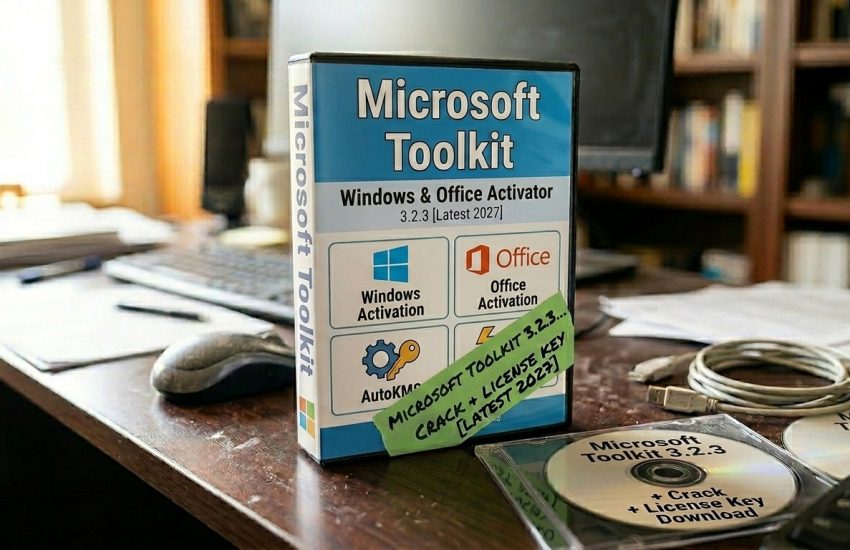
Microsoft Toolkit (originally maintained by TeamDaz and known historically across older v2.6.x and v2.7.x builds) is a legacy, third-party software utility created to simulate local Key Management Service (KMS) servers. Its core function is to intercept system licensing handshakes and force local activation loops on volume-licensed editions of Windows and Microsoft Office without connecting to official validation portals.
Regarding widespread web search results indexing a “Microsoft Toolkit 3.2.3 Crack + License Key Download”: as a technical peer in IT administration, it is critical to flag a major security hazard. The official developer group ceased updating the legitimate Microsoft Toolkit codebase years ago, with actual final releases peaking around the v2.7.x threshold. Piracy domains and third-party file repositories fabricate hyper-inflated version strings like “v3.2.3” to capture search volume. Because an activation script requires deep root system permissions to modify core registry branches, alter software protection parameters, and intercept network handshakes, these unverified “activators” are heavily backdoored. They serve as primary delivery systems for automated credential infostealers, clipboard-hijacking trojans, and background ransomware. Running an unverified crack loader instantly strips away your system’s built-in defenses, allowing bad actors to quietly harvest browser session cookies, crypto wallets, and personal data. You can maintain complete network safety and handle documents cleanly using 100% free and legal official deployment channels.
Key Features:
-
Local Server Emulation: Replaces the requirement for a physical corporate network by establishing a virtual, localized activation hook inside the workstation’s memory layer.
-
Dual System Interfacing: Features separate module tabs dedicated strictly to isolating configuration paths for either Windows kernel registries or Microsoft Office installation clusters.
-
EZ-Activator Automation Subroutines: Includes a basic script collection designed to automatically strip out failed retail product keys before applying local volume licensing parameters.
-
Licensing Diagnostics Loggers: Houses an integrated terminal readout panel that queries and displays current activation grace periods, SKU values, and system processing codes.
-
Product Key Custom Injection: Allows network managers to manually input and test legitimate Multiple Activation Keys (MAK) or Generic Volume License Keys (GVLK) across test devices.
The Modern Licensing & Security Landscape:
-
Hardware-Enforced Core Isolation: Modern operating systems run strict Virtualization-Based Security (VBS) parameters that continuously monitor system files, instantly identifying and blocking the kernel-level memory injections used by legacy activators.
-
Cloud-Managed License Tokens: Modern productivity suites like Microsoft 365 rely on persistent, server-side cryptographic user validation, meaning offline registry patches cannot unlock premium AI components or cloud storage access.
-
Automated Antivirus Signature Interception: Mainstream security solutions automatically target, quarantine, and delete binary hooks associated with unauthorized toolkit wrappers due to high risk ratings.
-
Persistent Registry Telemetry Verification: Built-in operating system stability scripts continuously verify local digital signatures against cloud baselines, resulting in rapid activation drops for modified files.
System Requirements:
| Component | Minimum Specification | Recommended Workspace Standard |
| Operating System | Windows 7 / 8 / 10 | Windows 10 / Windows 11 (64-bit Core Layout) |
| Runtime Environment | Microsoft .NET Framework v4.0 | Microsoft .NET Framework (Latest Continuous Version) |
| Processor (CPU) | 1.0 GHz Single-Core Processor | Modern Multi-Core Intel / AMD Processor |
| Memory (RAM) | 1 GB System Memory | 4 GB RAM or higher (Ensures smooth background operations) |
| Storage Space | ~50 MB for core toolkit files | Minimal (Maintains a small system memory footprint) |
How to Access Office & Windows Utilities Legally (100% Free)?
You can easily handle word documents, manage calculations, and run your operating system safely without running risky, cracked executable files on your local hard drive.
-
Utilize Microsoft 365 for the Web (Free Forever): Open your preferred web browser and head directly to Microsoft Office Online. Sign in with a standard, free Microsoft account to immediately access Word, Excel, and PowerPoint within your browser window. This official cloud interface natively reads, edits, and saves all Microsoft format extensions (
.docx,.xlsx,.pptx) completely free, safely, and without requiring any local installation. -
Initialize an Official Evaluation License: If your active production workflow explicitly demands the computing power of native desktop software, navigate to the official Microsoft 365 Trial Portal to activate a secure 30-Day Evaluation Package, downloading untouched binary setups directly from official Content Delivery Networks.
-
Deploy a Free Open-Source Productivity Suite: If you require a permanent, 100% free offline productivity suite for heavy spreadsheets and local layout formatting, download LibreOffice from its official homepage. This globally maintained, secure open-source engine features seamless drop-in compatibility for all major Office document extensions.